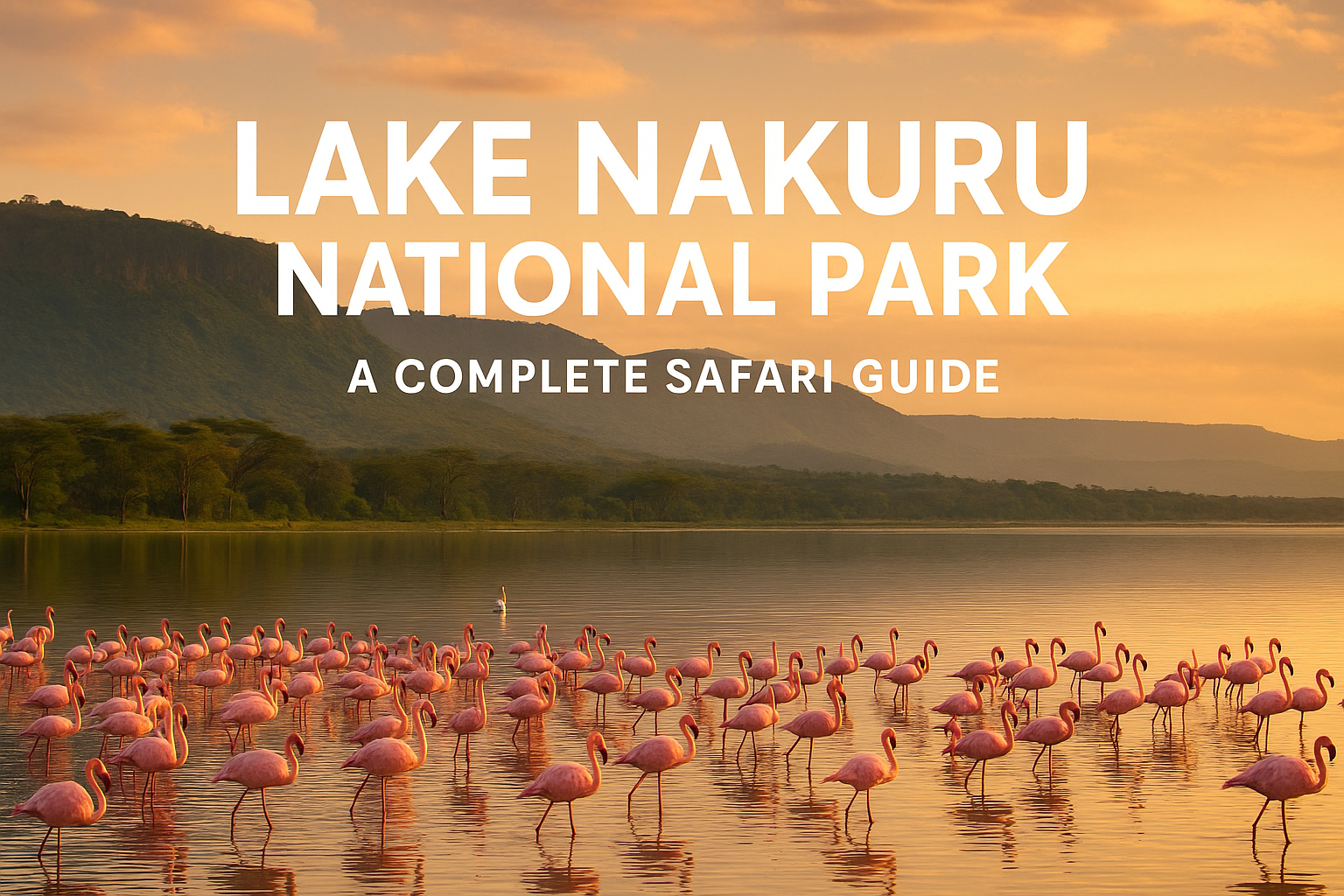
The Flamingo Kingdom Where Every Sunrise Feels Like a Movie Scene
There are safaris…
And then there’s Lake Nakuru — a place so enchanting that even seasoned travelers stop, stare, and whisper, “Wow.”
The first time you enter the park, the air smells of fresh grass and acacia. A thin mist floats above the lake. In the distance, a pink glow shimmers like a dream—you’ll soon discover it’s thousands of flamingos greeting the morning sun.
Welcome to Lake Nakuru National Park, one of Kenya’s most magical wildlife sanctuaries.
If you’re planning your first visit, or returning for your tenth, this guide will show you exactly what to expect, when to go, and how to experience the park like a true explorer.
🦩 Why Lake Nakuru Is Unlike Any Other Safari Park
Most parks are known for one or two things.
Lake Nakuru? It delivers a whole buffet of wonders.
✔ Home of the iconic pink flamingos
Sometimes thousands. Sometimes millions. When they rise into the sky, it feels like watching a pink storm take flight.
✔ One of the best places in Africa to see rhinos
Black rhinos, white rhinos… grazing calmly just meters away. A rare and breathtaking sight.
✔ Compact, easy to explore, and overflowing with wildlife
Lions, leopards, buffalos, giraffes, hyenas, zebras — all packed within a park small enough to explore in one day.
✔ Stunning landscapes
Golden savannahs. Fever tree forests. Rocky cliffs. Waterfalls. Lakeside plains. Every turn feels like a new chapter in a story.
📍 Where Is Lake Nakuru National Park?
Located just 10 minutes from Nakuru City in the Great Rift Valley, it’s one of the most accessible parks in Kenya.
Whether you're coming from Nairobi (2.5–3 hours) or staying at a Nakuru hotel, you can easily plan a half-day or full-day safari without long, exhausting drives.
🌤 Best Time to Visit Lake Nakuru National Park
Here’s the magic about Lake Nakuru:
There is no bad time to visit.
But each season has its charm:
⭐ Dry Season (June–October) — Best Wildlife Moments
Perfect for game drives. Animals gather near water, grass is lower, and predators are easier to spot.
Expect:
Better chances of seeing lions & leopards
Clearer viewpoints
Less muddy roads
⭐ Short Rains (November) — Beautiful & Green
The park transforms into a lush, green paradise. Amazing for photography.
⭐ Wet Season (March–May) — Birdwatcher’s Heaven
This is when the flamingos often gather in large numbers because the lake becomes richer in algae.
Expect:
Dramatic pink flocks
Crystal-clear skies after rain
Fewer tourists
Discounted hotel rates (great for budget travelers!)
💰 Park Fees (Current Estimate)
While fees may vary year to year, here’s a helpful guide:
For Kenyan Citizens
Adults: Ksh 860
Children: Ksh 215
For Residents
Adults: Ksh 1,300
Children: Ksh 430
For International Tourists
Adults: USD 60
Children: USD 20
Vehicle fees apply separately depending on the vehicle type.
(If you’d like, I can format this into a nice, clean infographic for your blog.)
🦁 What to Expect on Your Safari (Experience Breakdown)
1. The Flamingo Spectacle
The moment you reach the lake, everything stops.
The air vibrates with the calls of flamingos. Their reflections ripple across the water. If you’re lucky, they take off in huge synchronized waves—one of the most dramatic wildlife sights on Earth.
2. Close-Up Rhino Encounters
Lake Nakuru is one of Kenya's top strongholds for both white and black rhinos.
You may see them:
grazing calmly,
resting in the grass,
or walking right across the road.
Few parks offer sightings this predictable and this close.
3. Lions in the Trees
Yes — Nakuru lions sometimes climb trees.
It’s not common everywhere, but this park offers some magical sightings of lions resting on branches like oversized house cats.
4. The Breathtaking Baboon Cliff Viewpoint
Drive up the cliff.
Step out of your vehicle.
Then watch the entire lake and park open beneath you.
This is hands down the park’s most stunning viewpoint — perfect for photos, picnics, and dramatic pause moments.
5. Waterfalls and Forests
Make a stop at:
Makalia Waterfall
The Fever Tree Forest
Roan Hill
Each area feels like a different world inside the same park.
📸 Photography Tips (Capture the Magic Like a Pro)
Come early — sunrise paints the lake pink and gold.
Bring a zoom lens for birds and cats.
Visit Baboon Cliff for wide-angle shots.
Avoid mid-day when light is harsh.
Don’t rush — the park rewards patience.
🚗 How Long Do You Need for the Safari?
You can enjoy the park in:
4–5 hours (Half-day) – enough for flamingos + rhinos + cliff
1 full day – perfect for exploring every corner
2 days – ideal for photographers and serious wildlife lovers
🎒 What to Pack
Camera or phone with good storage
Sunglasses & hat
Sunscreen (trust me on this one!)
Water
Binoculars
Comfortable clothing
Snacks for long drives
🌅 Final Thoughts: A Safari You’ll Never Forget
Lake Nakuru National Park isn’t just a place—it’s an experience that touches all your senses.
The sights.
The sounds.
The stillness of the lake.
The roaring life of the wild around you.
Whether you're traveling solo, with family, or staying at a Nakuru hotel just minutes away, this is a safari that will stay in your memory long after your journey ends.